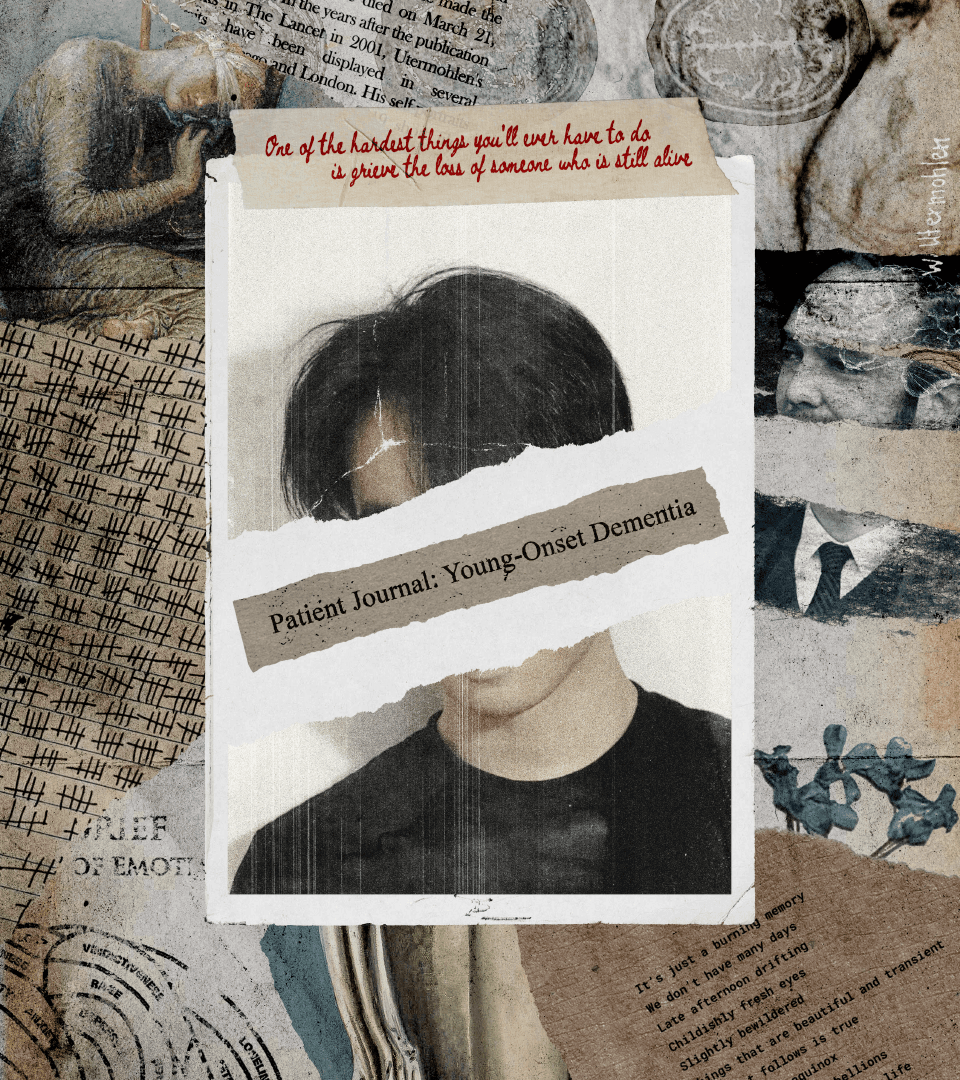
Patient Journal:
Young-Onset Dementia
2022
Designing a infographic poster (Part A) and visualize it into a more specific scope, convert it into an envisioned information piece (Part B).
Patient Journal:
Young-Onset Dementia
2022
Designing a infographic poster (Part A) and visualize it into a more specific scope, convert it into an envisioned information piece (Part B).
Topic Selection
I’ve chose dementia as the context of my topic, due to I’m drawn into the fact of the unknown horror of grieving the lost of someone who is still alive, and to translate the emotion or feelings of and individual suffering in dementia, raise the awareness to younger generations about the sign or stages.
Phase 1: Ideation Process
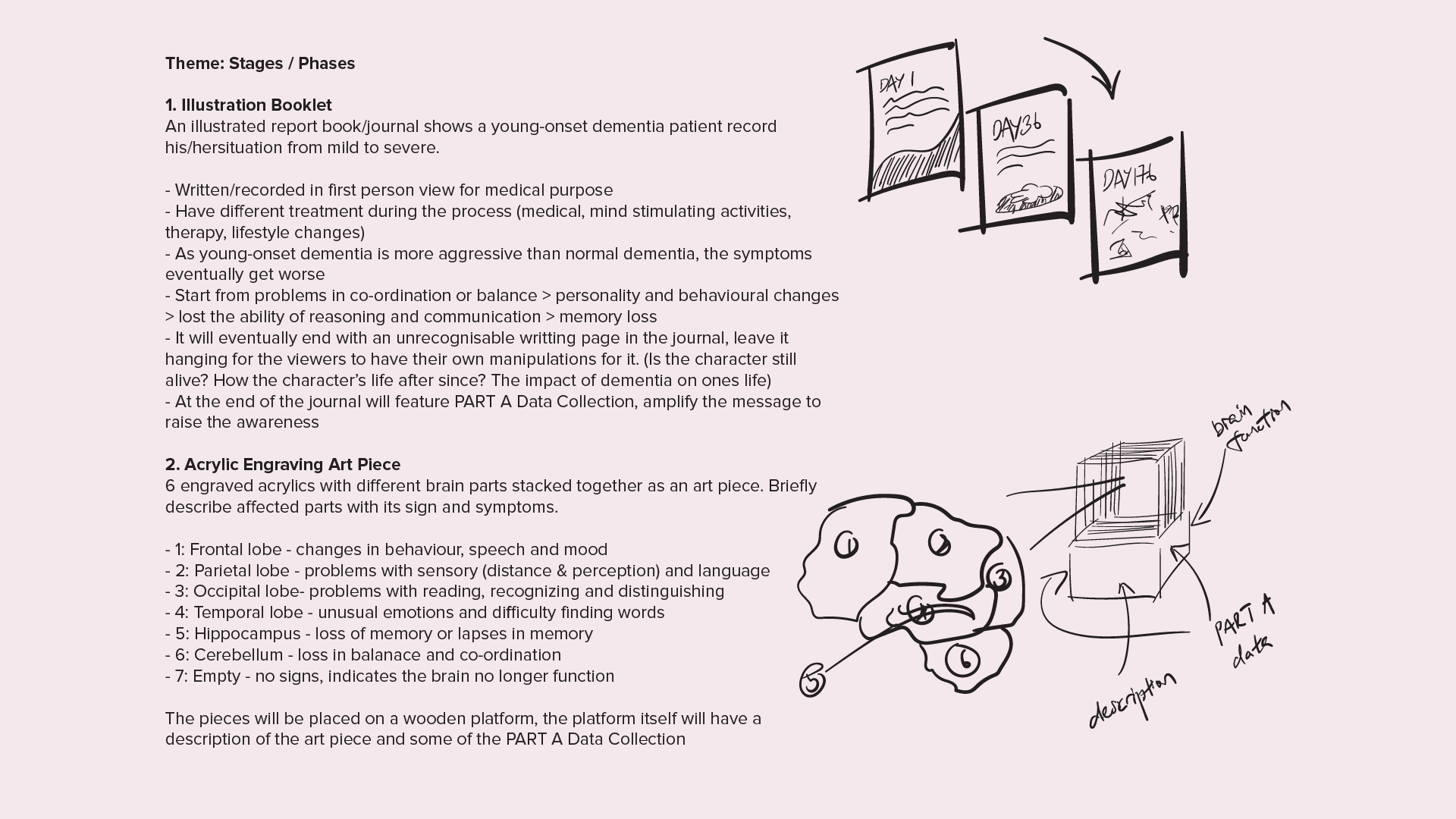
For the envisioned informational piece, I've planned to create an illustrated booklet that tells the story of a character's life after being diagnosed with young-onset dementia, depicting the prominent stages of their journey. Additionally, I intend to create a series of acrylic engravings showcasing the progression of dementia. Each piece will represent different stages of the condition.
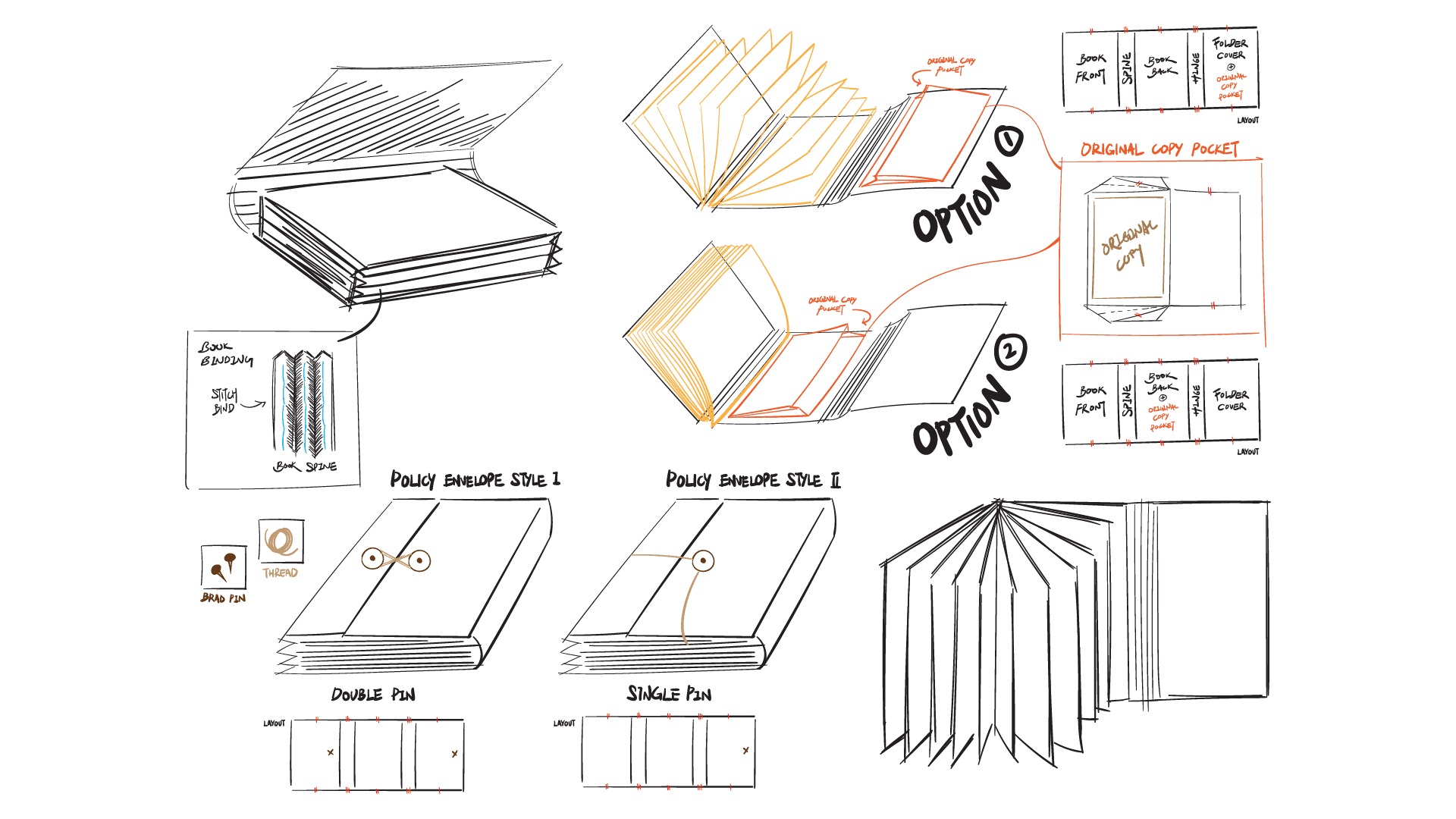
I've planned to present the piece as separate pages within a folder, and I have considered three options:
Republish style: The entire piece would be fully digitized, allowing for a more conceptual design approach. However, it may lack the expression, textures, and emotional impact that come with traditional methods.
Note-taking style: Everything would be handwritten, emphasizing the emotions involved. However, this option might lack the conceptual design elements.
Combination of both options: I would first handwrite an original copy of the content, then scan and digitize it. During the presentation, I would showcase both the digitalized version and the original handwritten copy.
However, I've chosen the third option and further develop from it.
Phase 2: Story Scripting
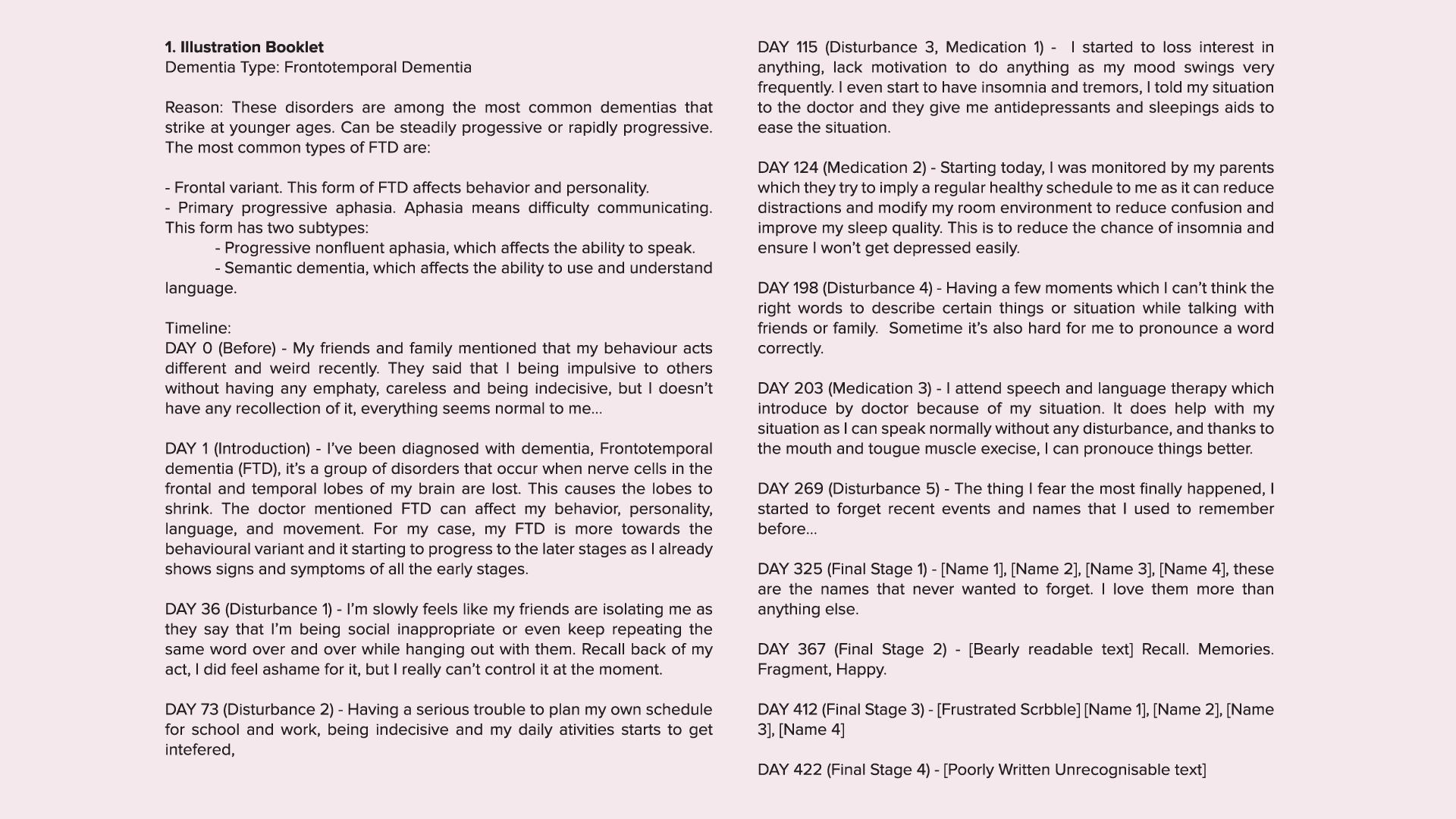
During the process of scripting the story, I have chosen Frontotemporal Dementia as the primary type of dementia that afflicts the fictional character in the journal. I made this choice because it is one of the most common dementias that occur at younger ages, and it can exhibit both a steady and rapid progression.
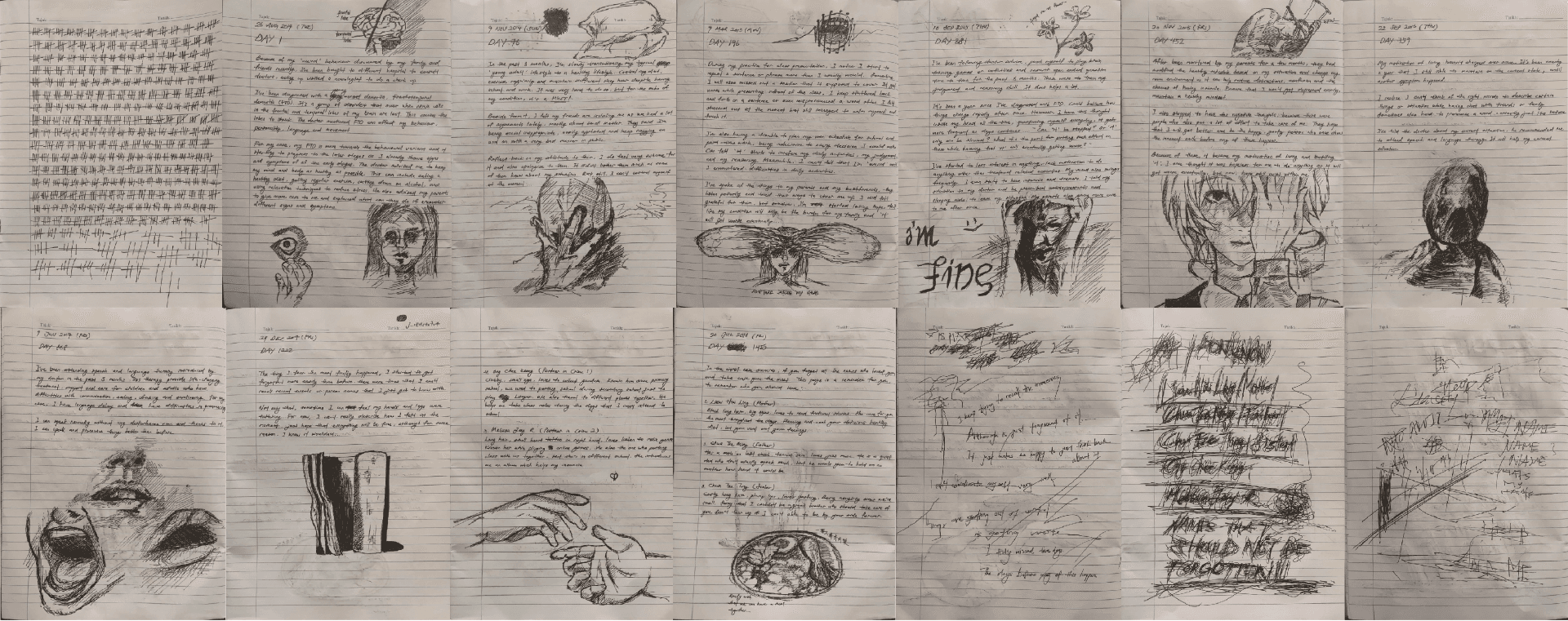
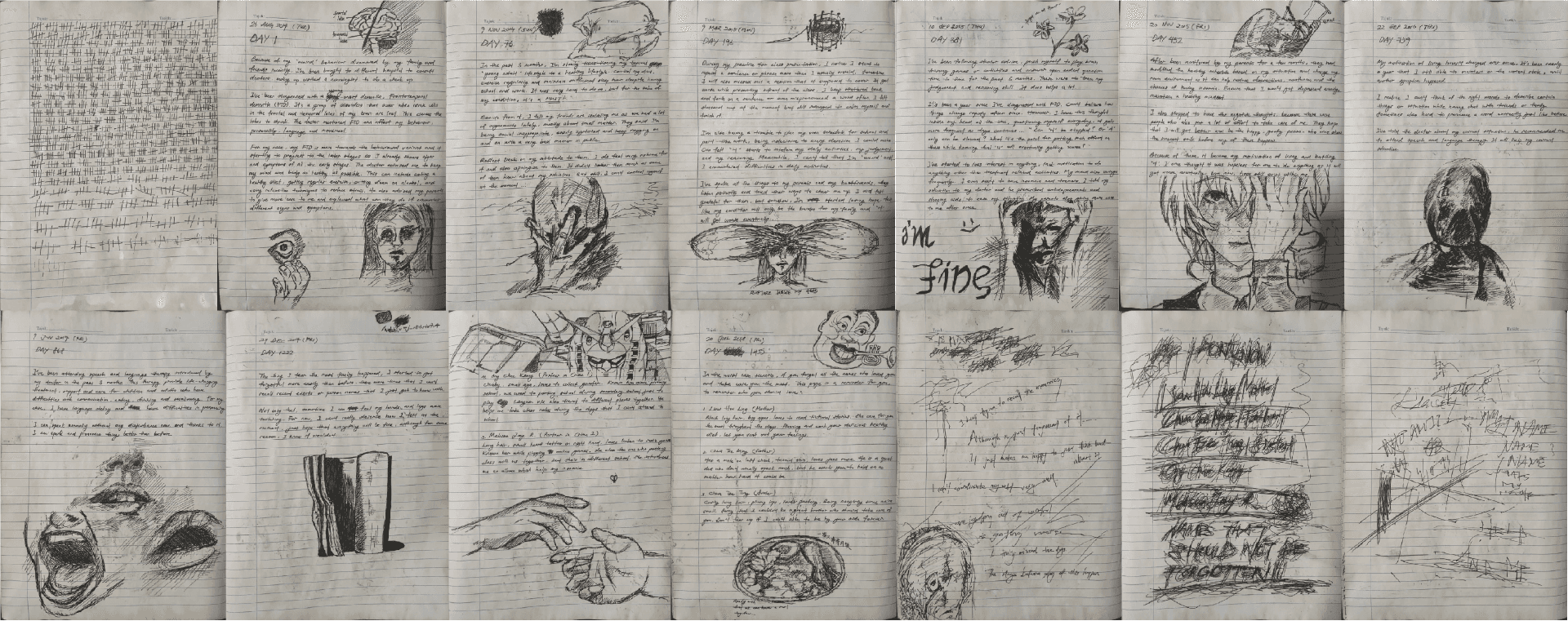
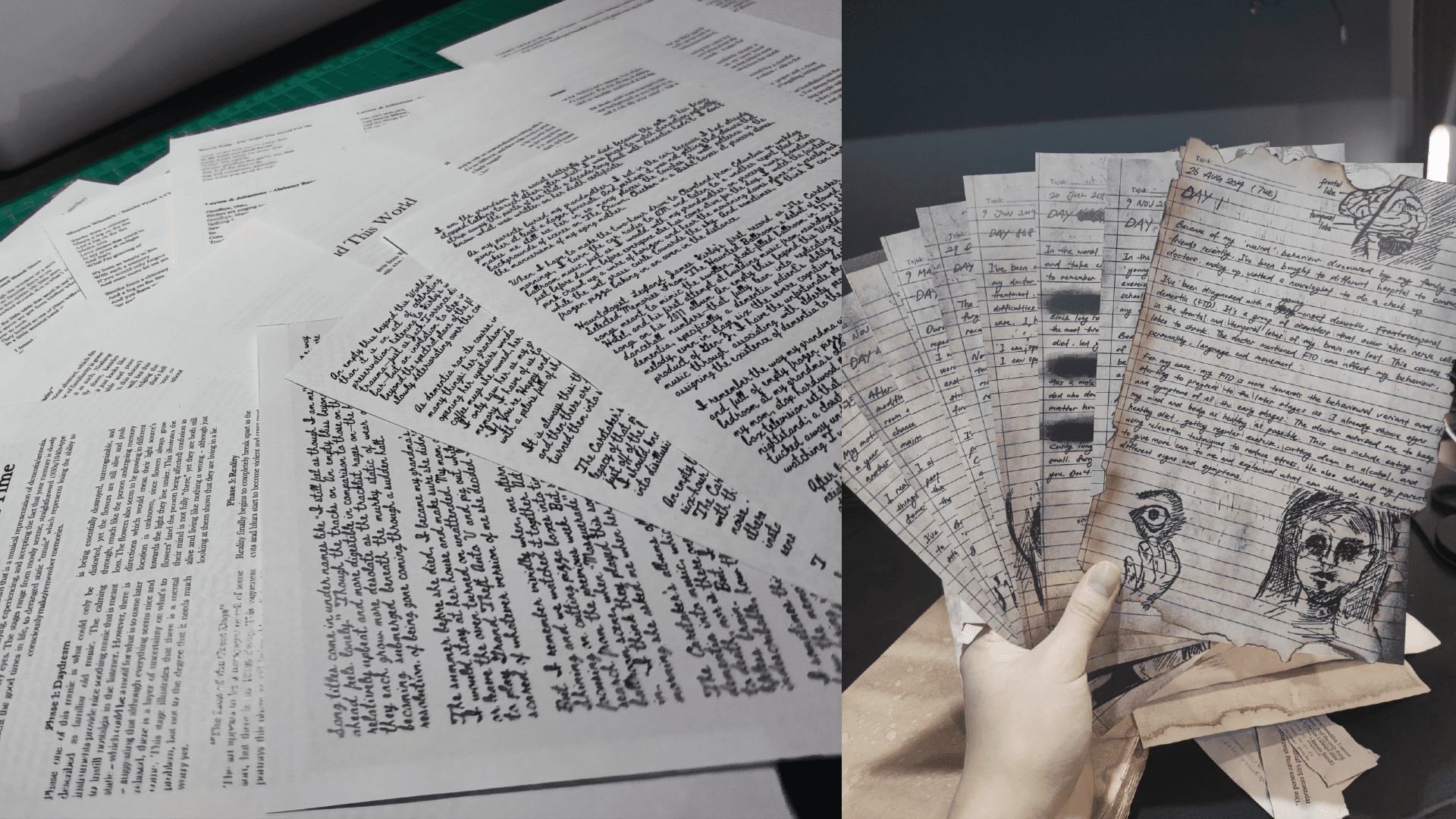
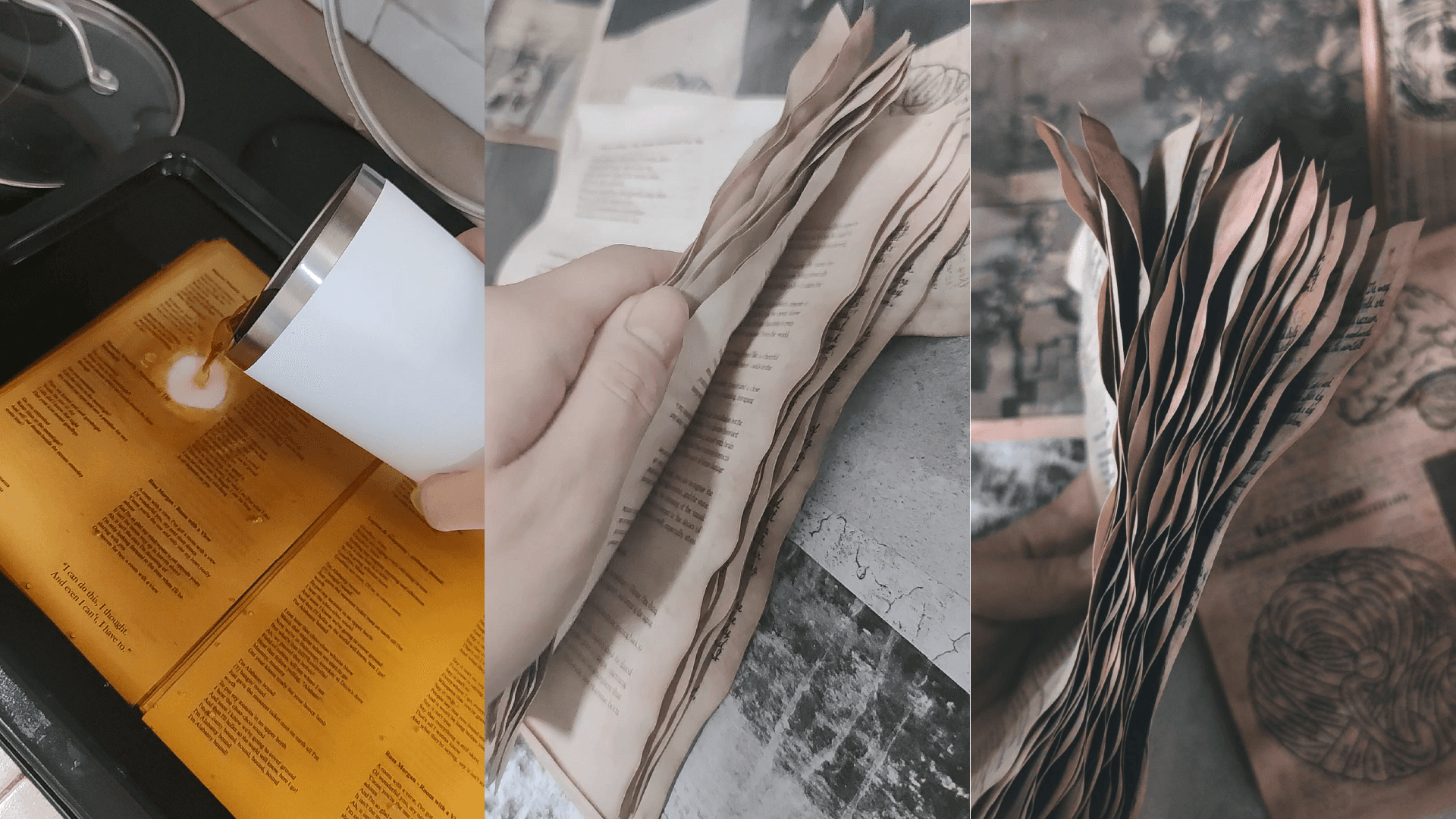
The execution in a GAPEN book as the original copy of the journal and the iteration after it has been tea-stained.
Phase 3: Tea-Stained
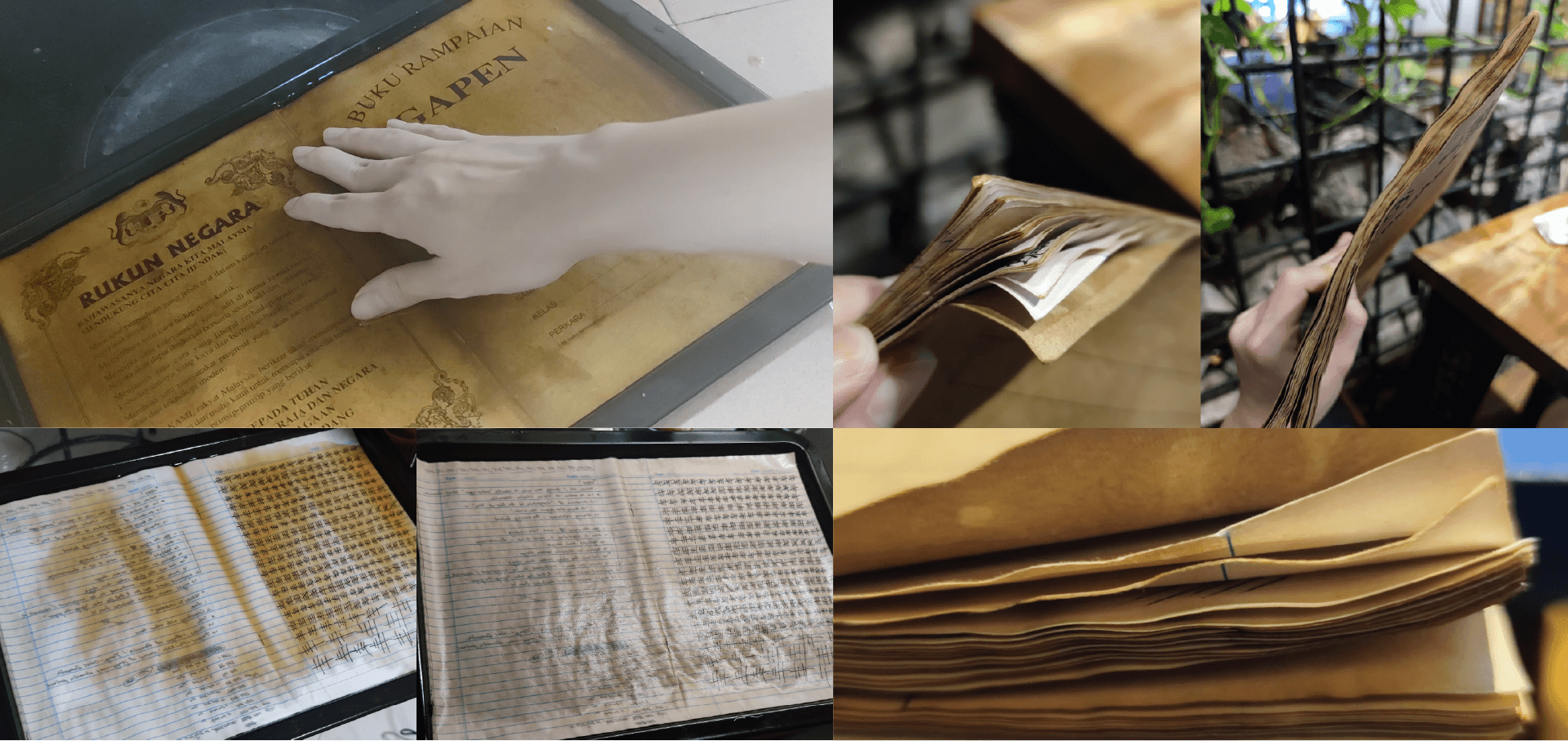
Phase 4: Digital Mockup Preview
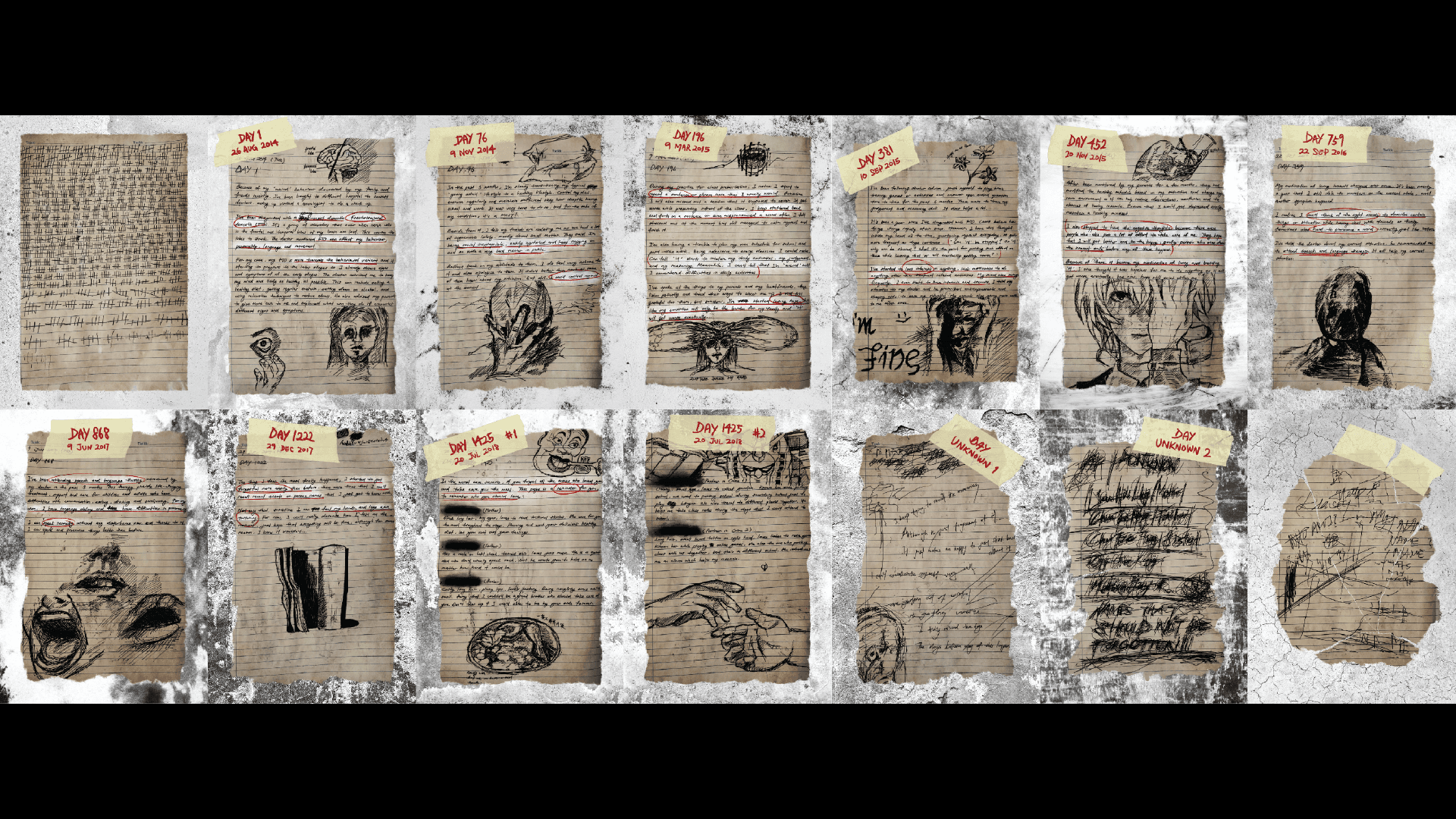
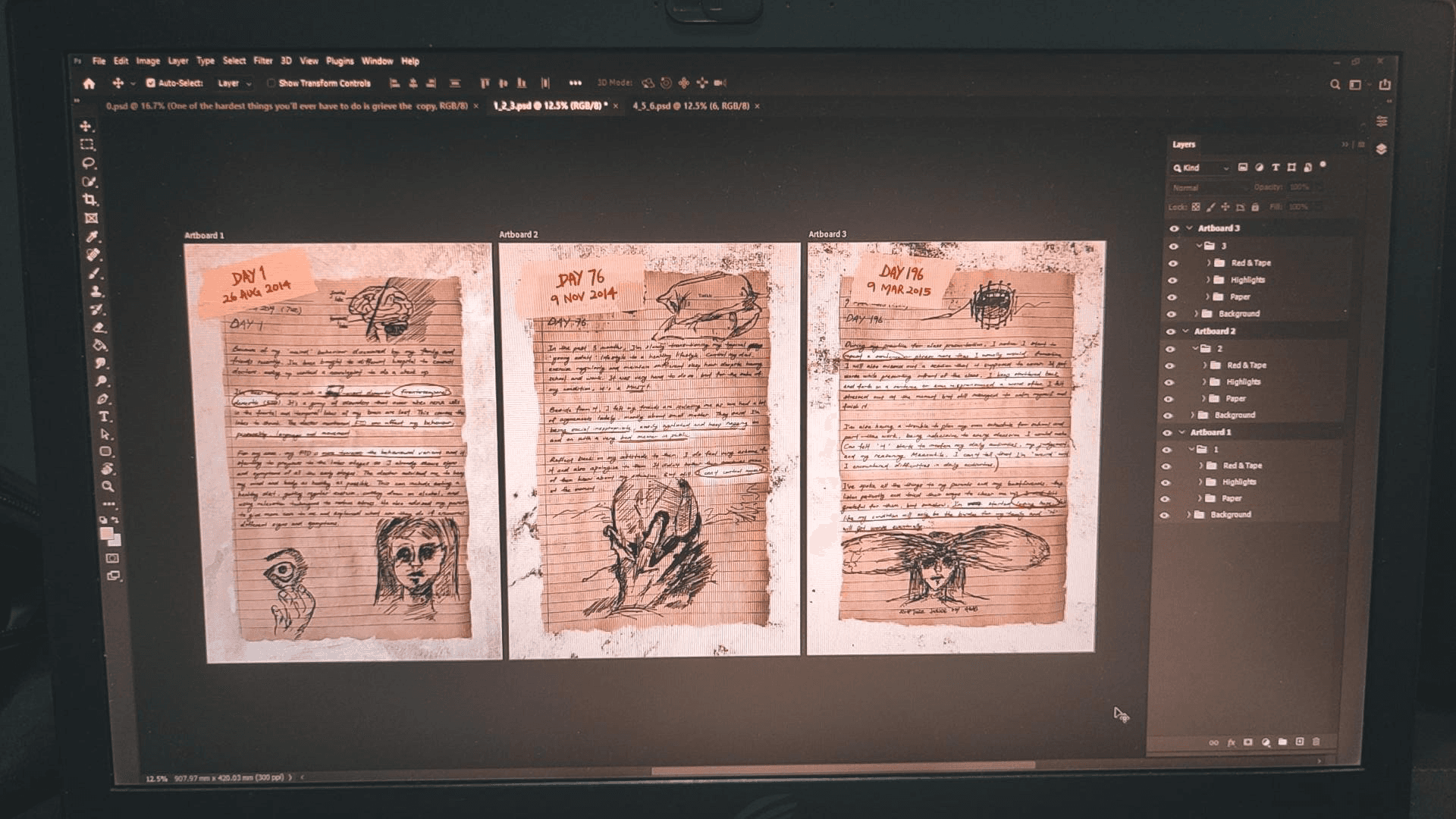
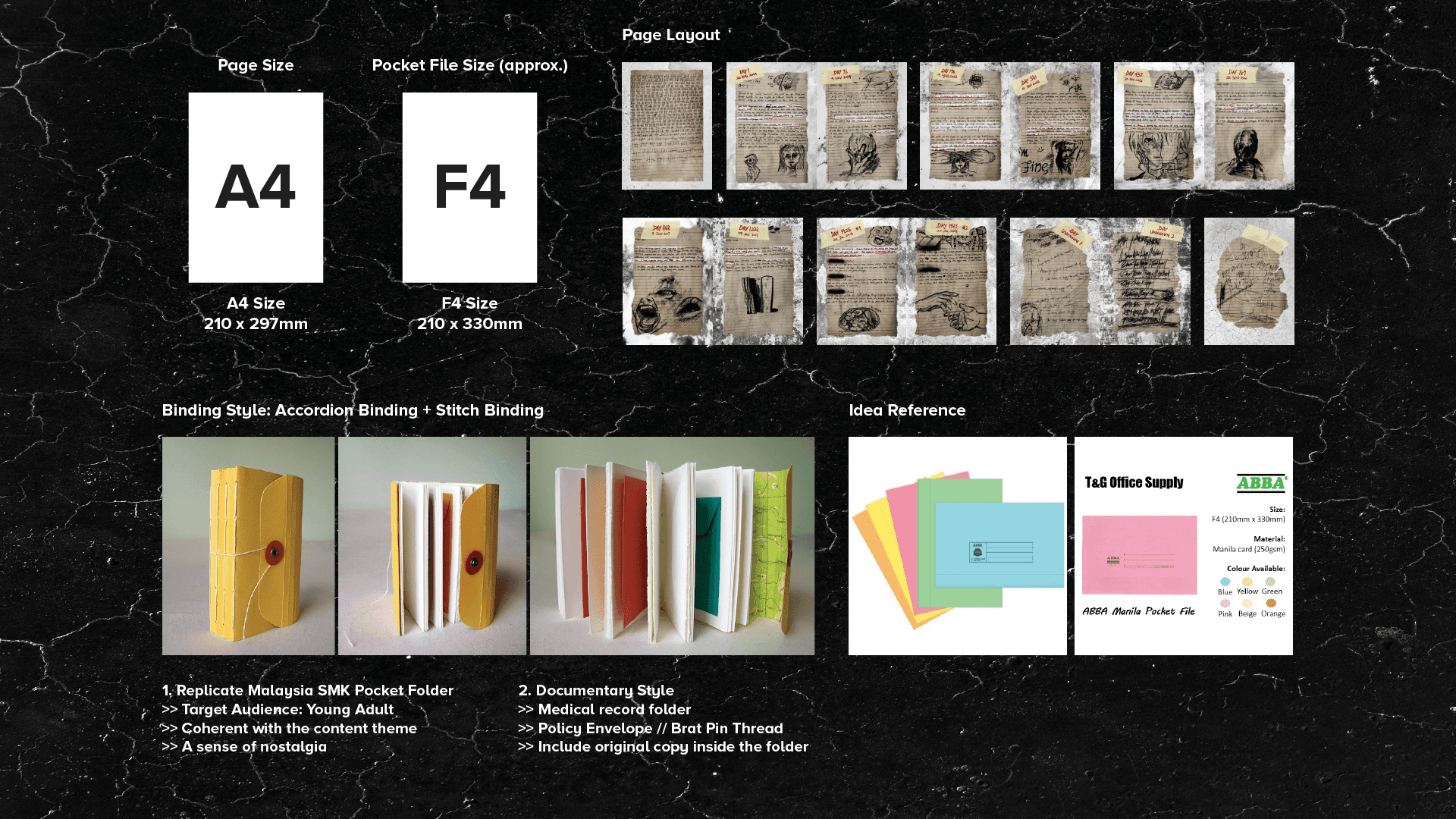
Each pages will have their own grunge background which is related with the patient's mood and thoughts. Each pages will also have a few highlighted points circled or underlined with red marker which seems that is analyzed by someone, and it is for the audience to glimpse through what is really happening without reading the whole chunk of it. Besides, there will be a masking tape in the corner which label which day and the date of the written page.
Phase 5: Ideation Repurpose & Prototype
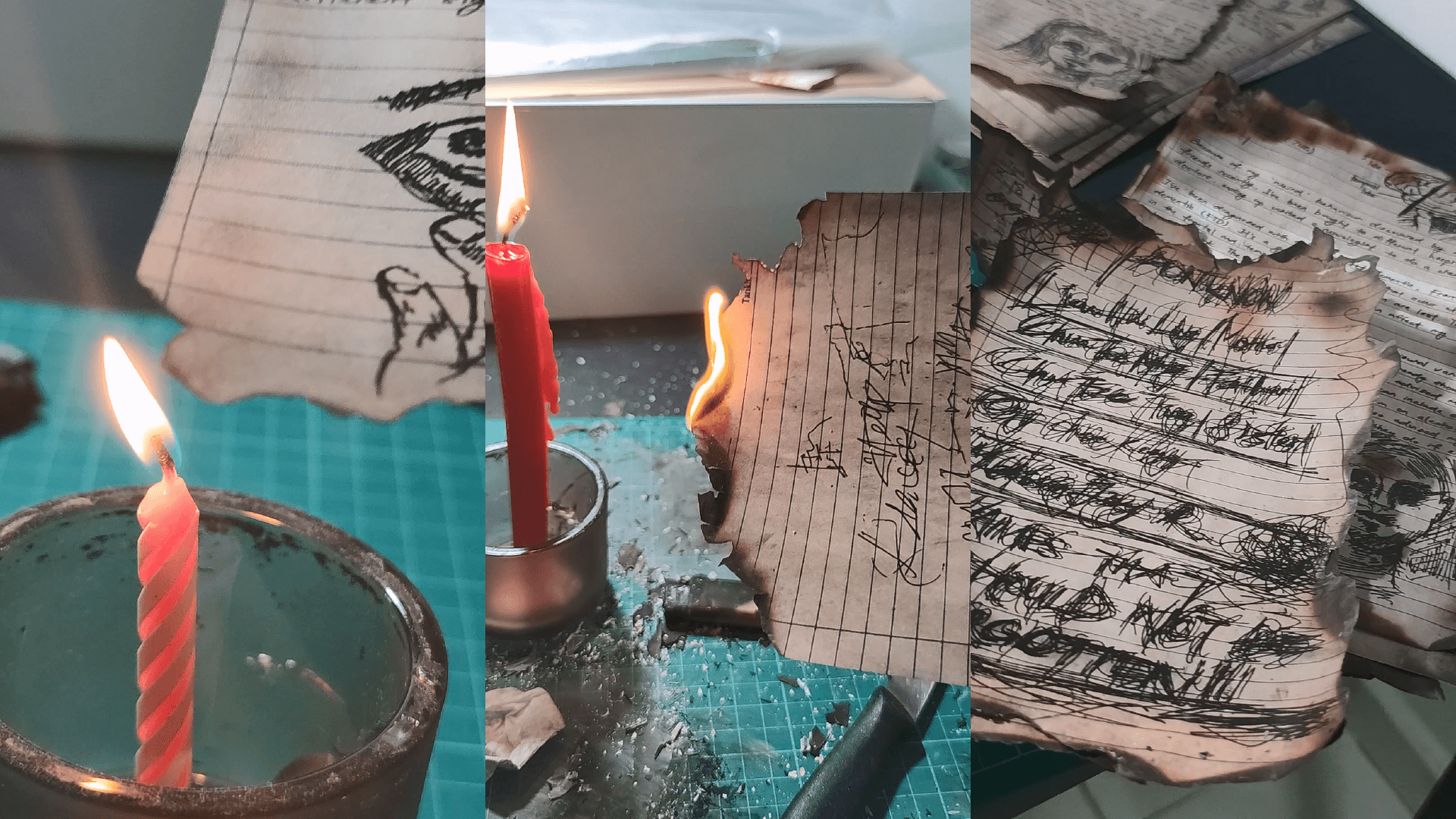
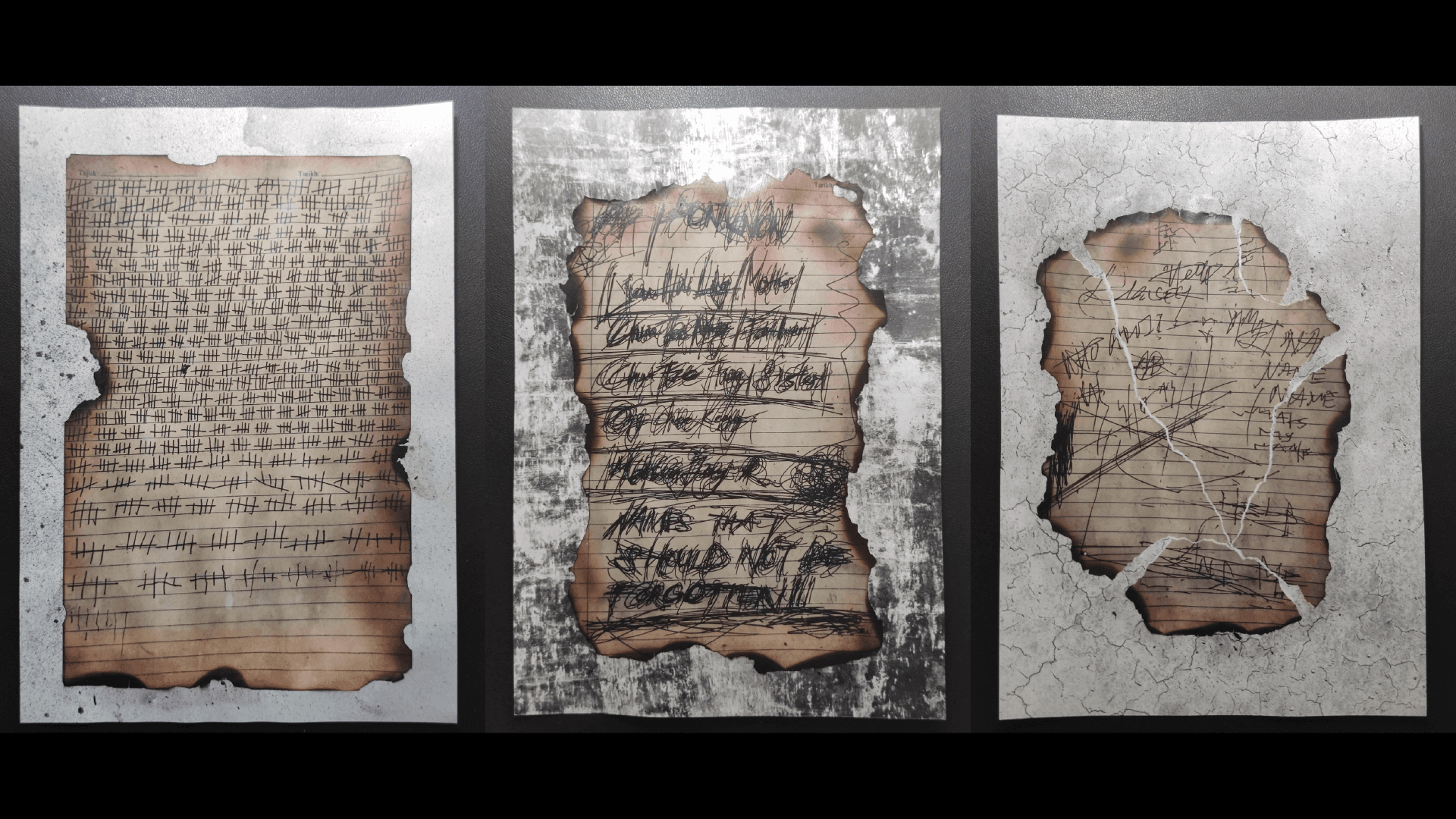
Phase 6: Prints, Stained, Burn, Paste
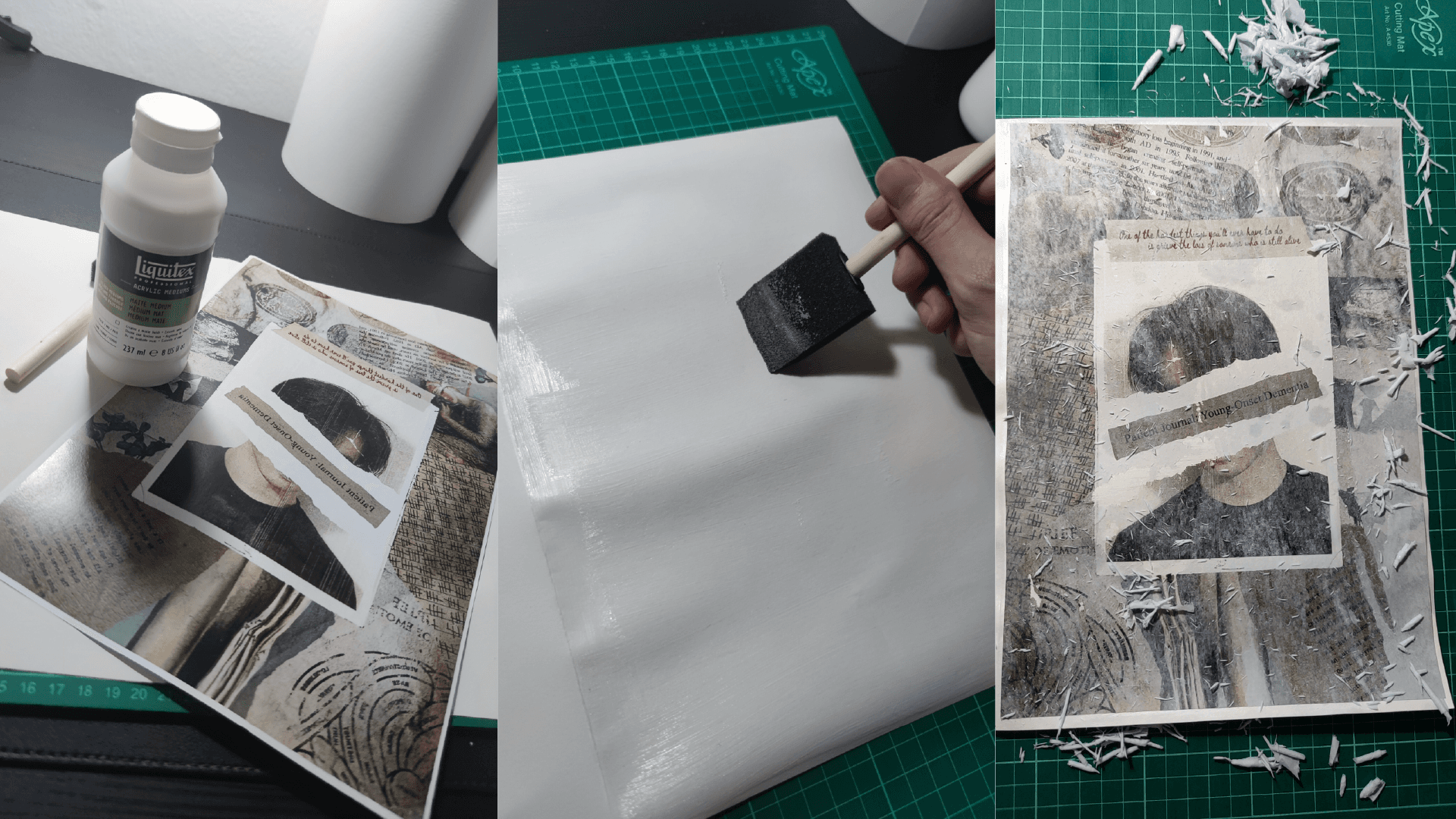
Phase 7: Image Transfer & Stitching
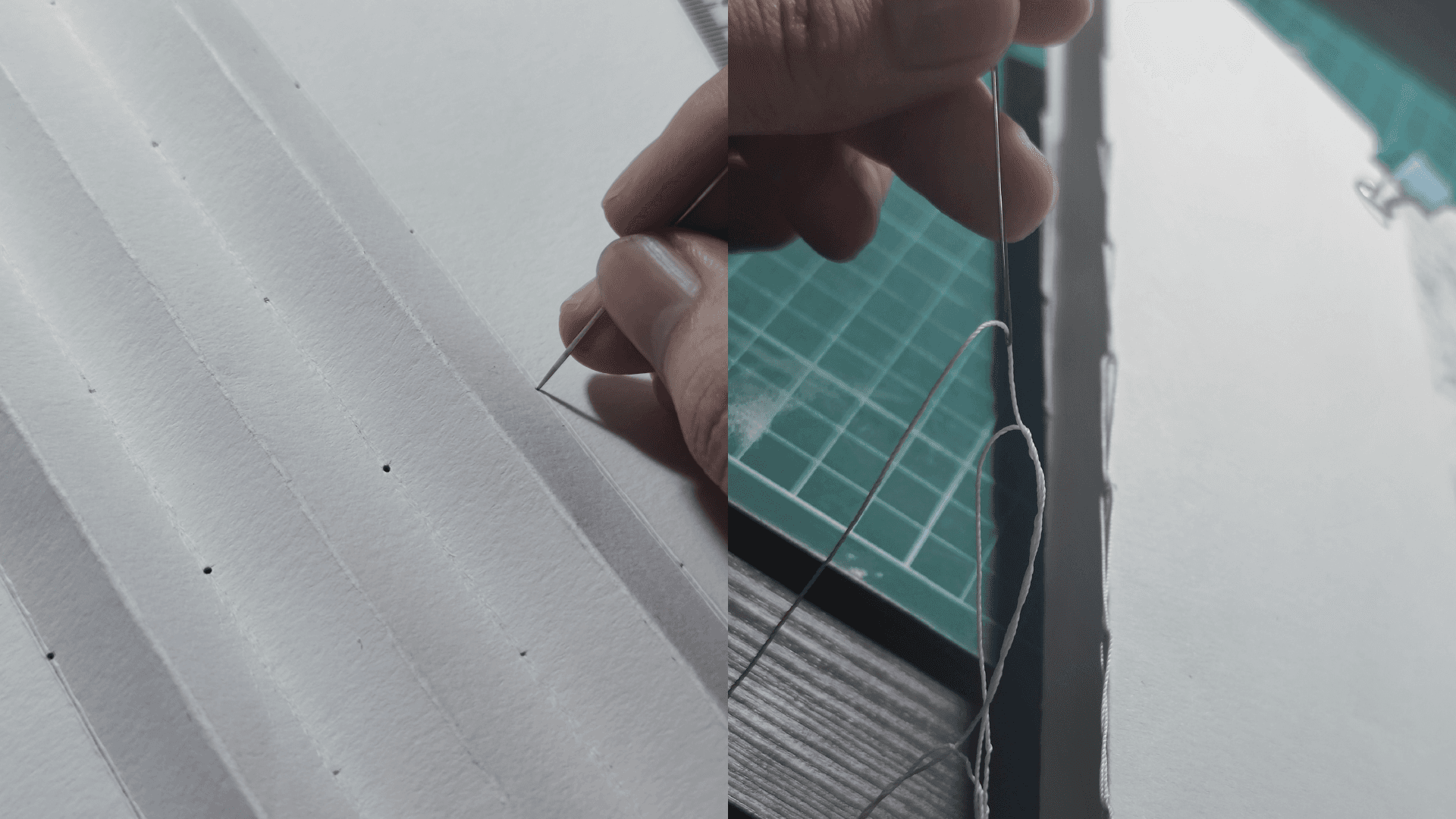
Phase 8: Make Envelopes & Coffee-Stained
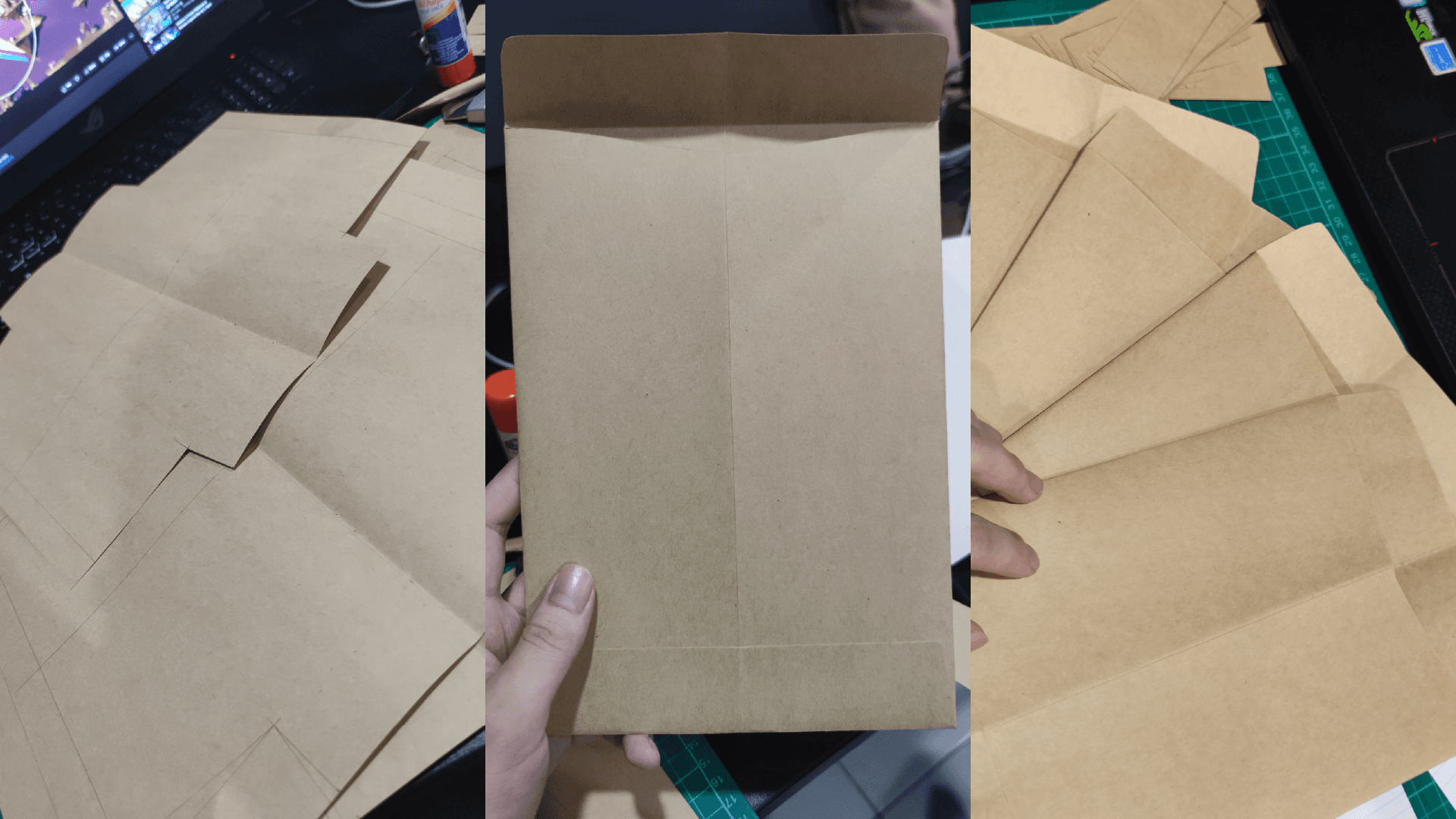
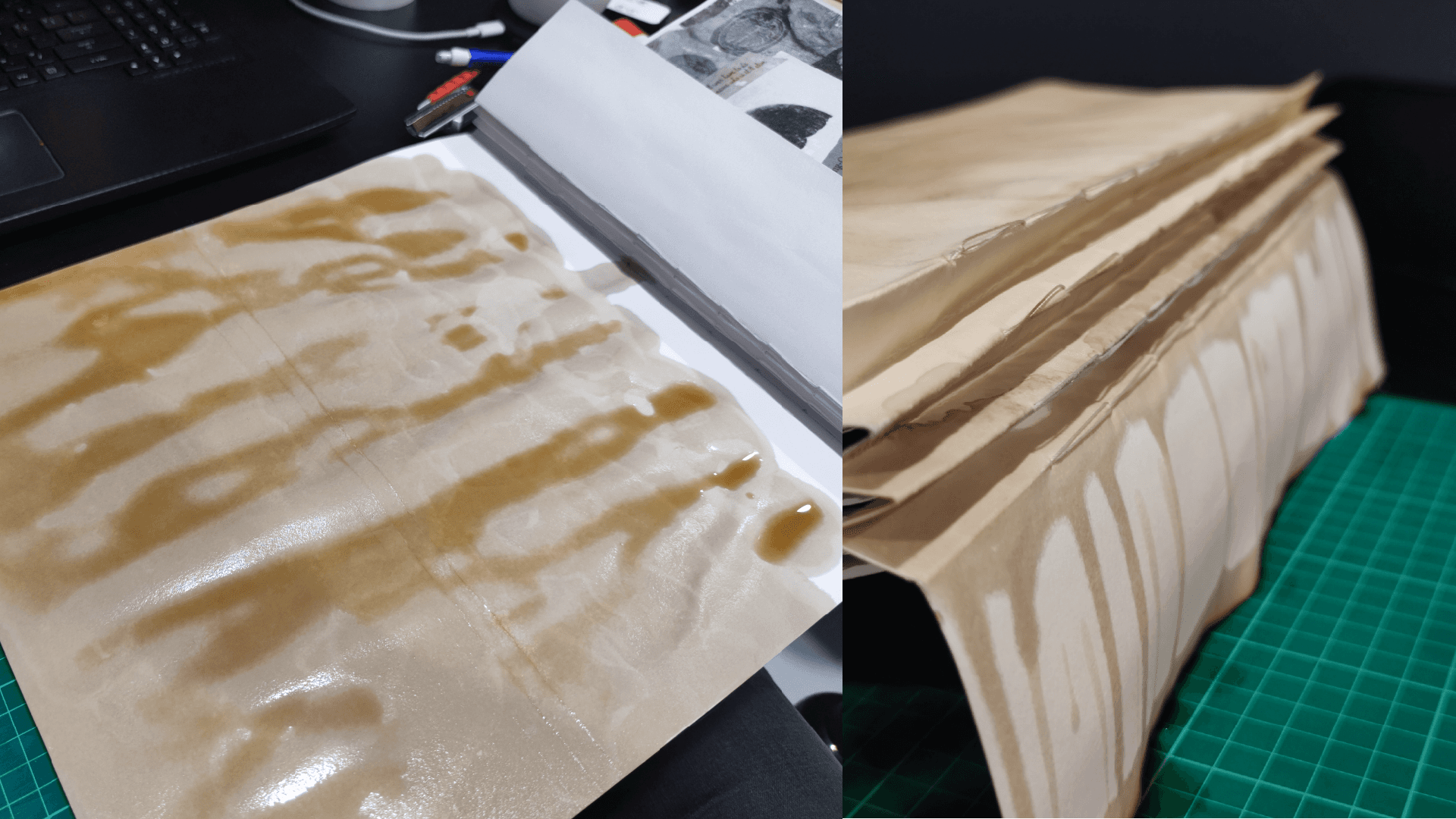
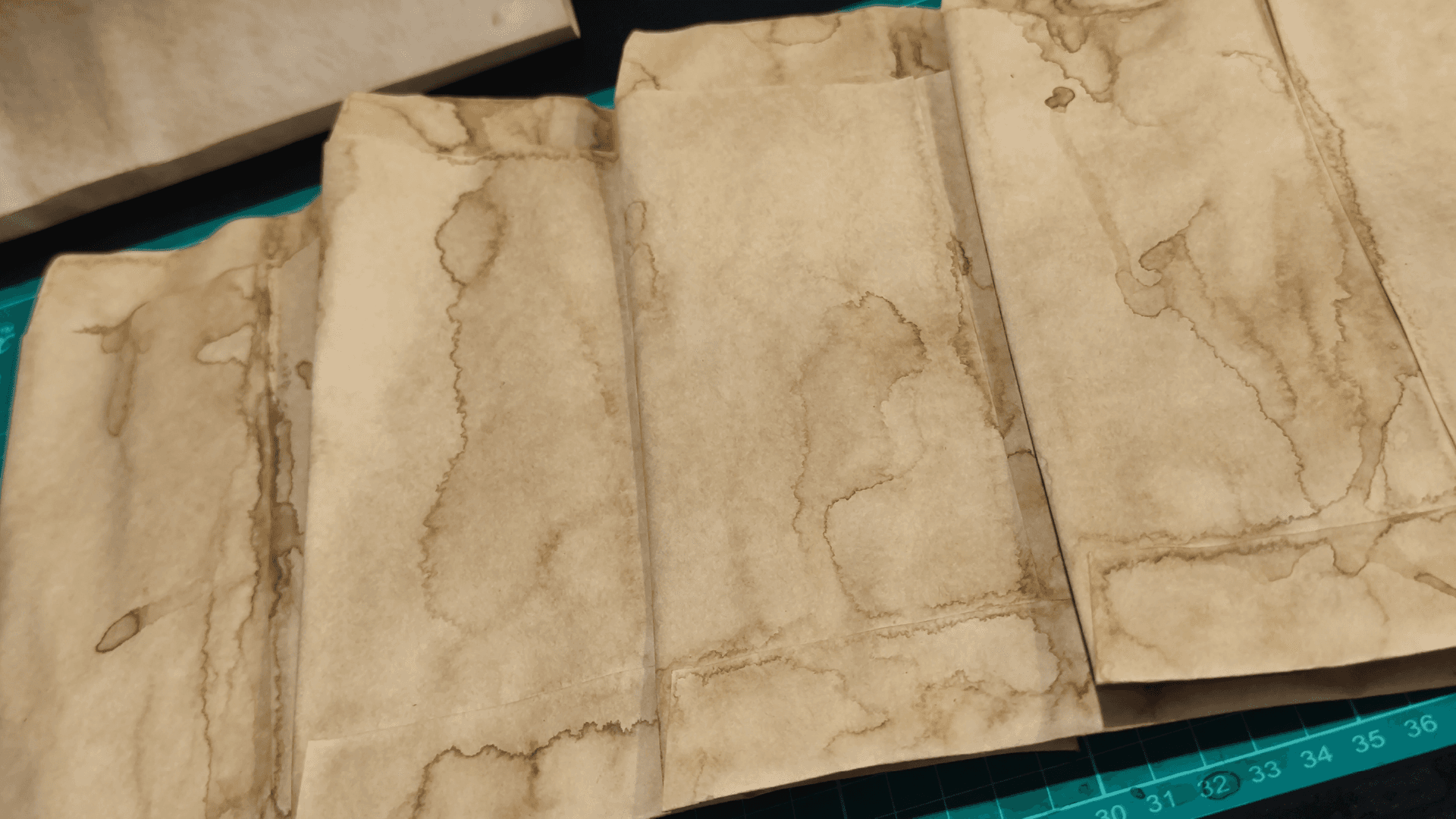
Phase 9: Vinyl Album Production
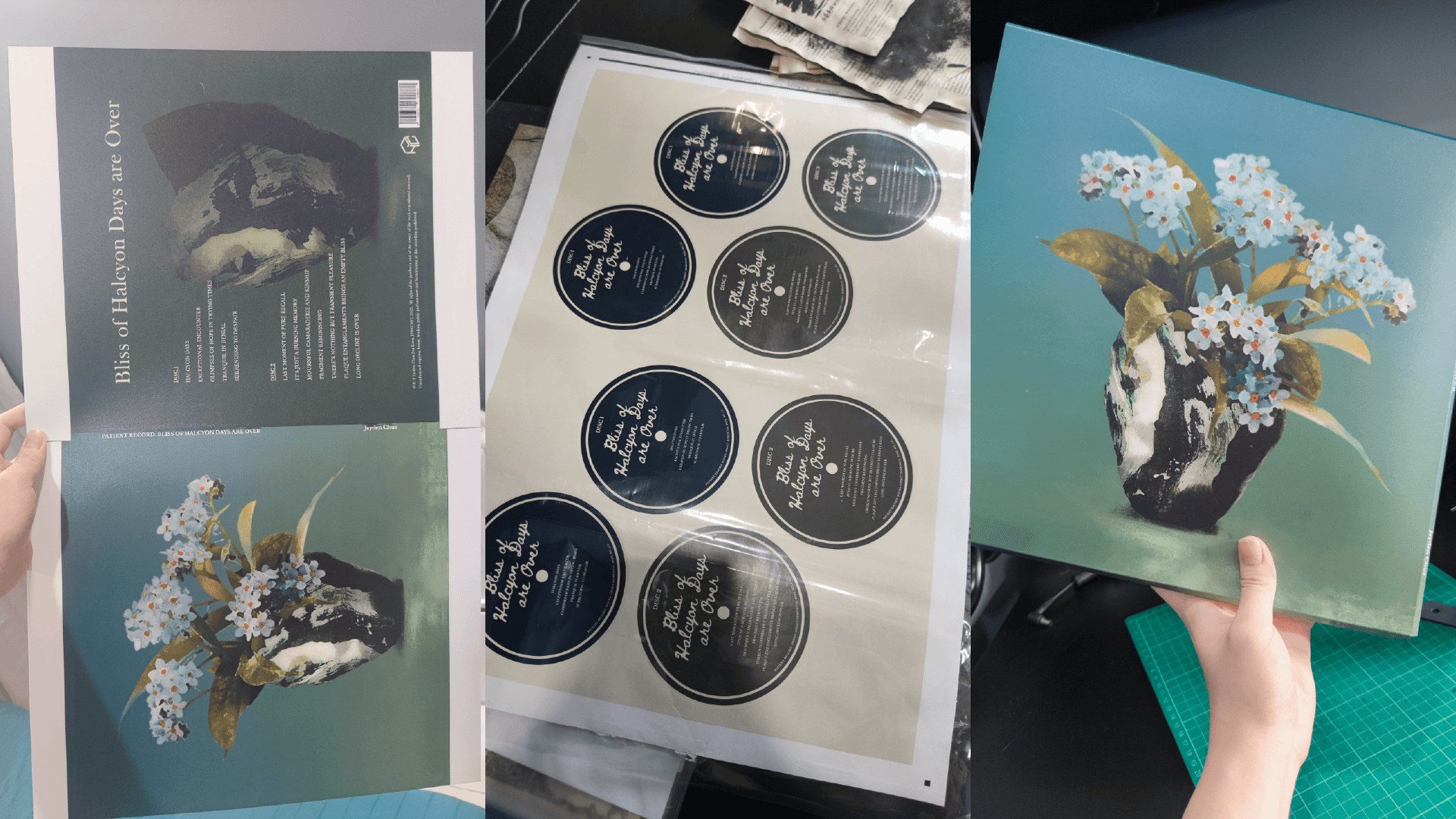
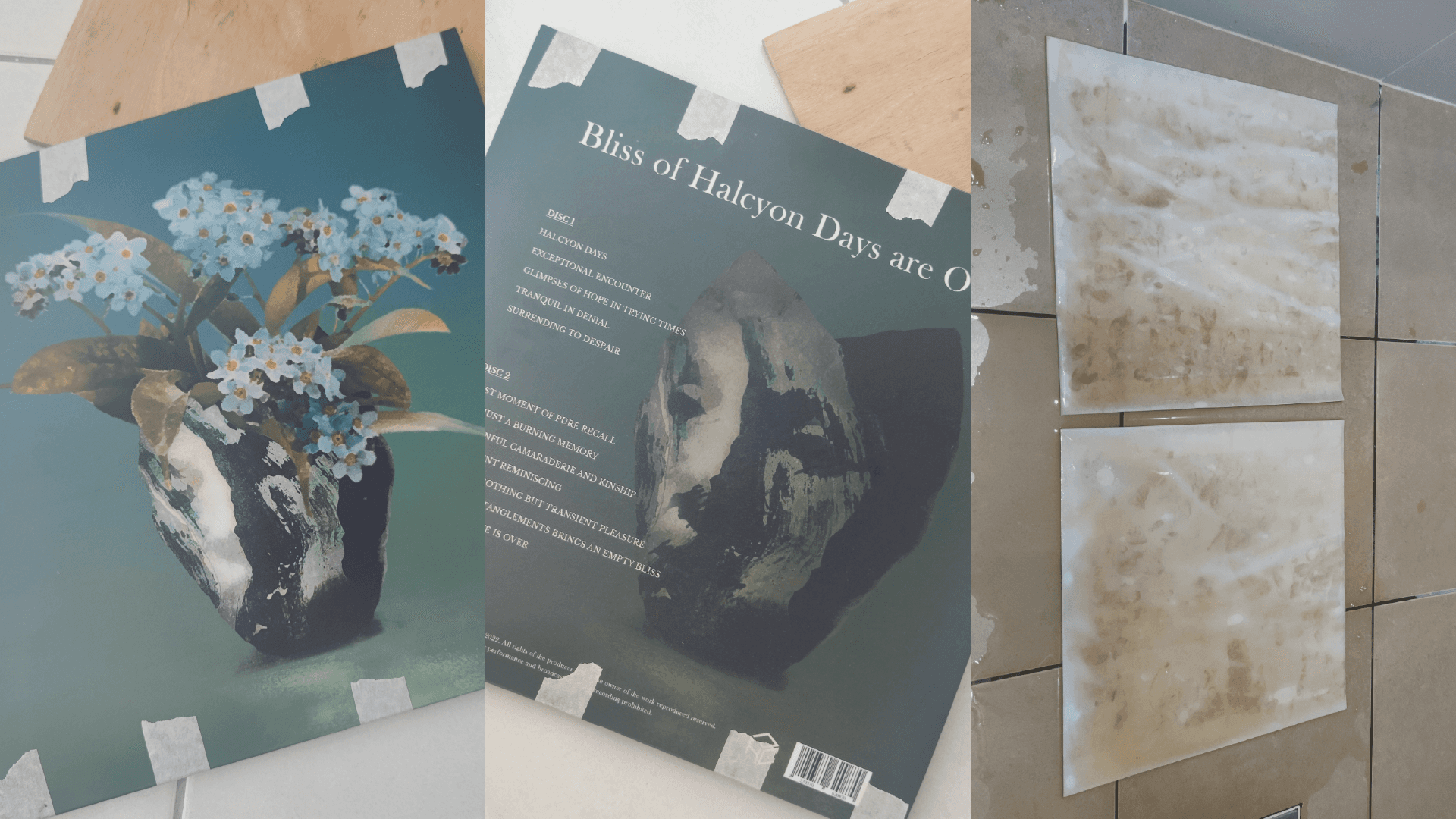
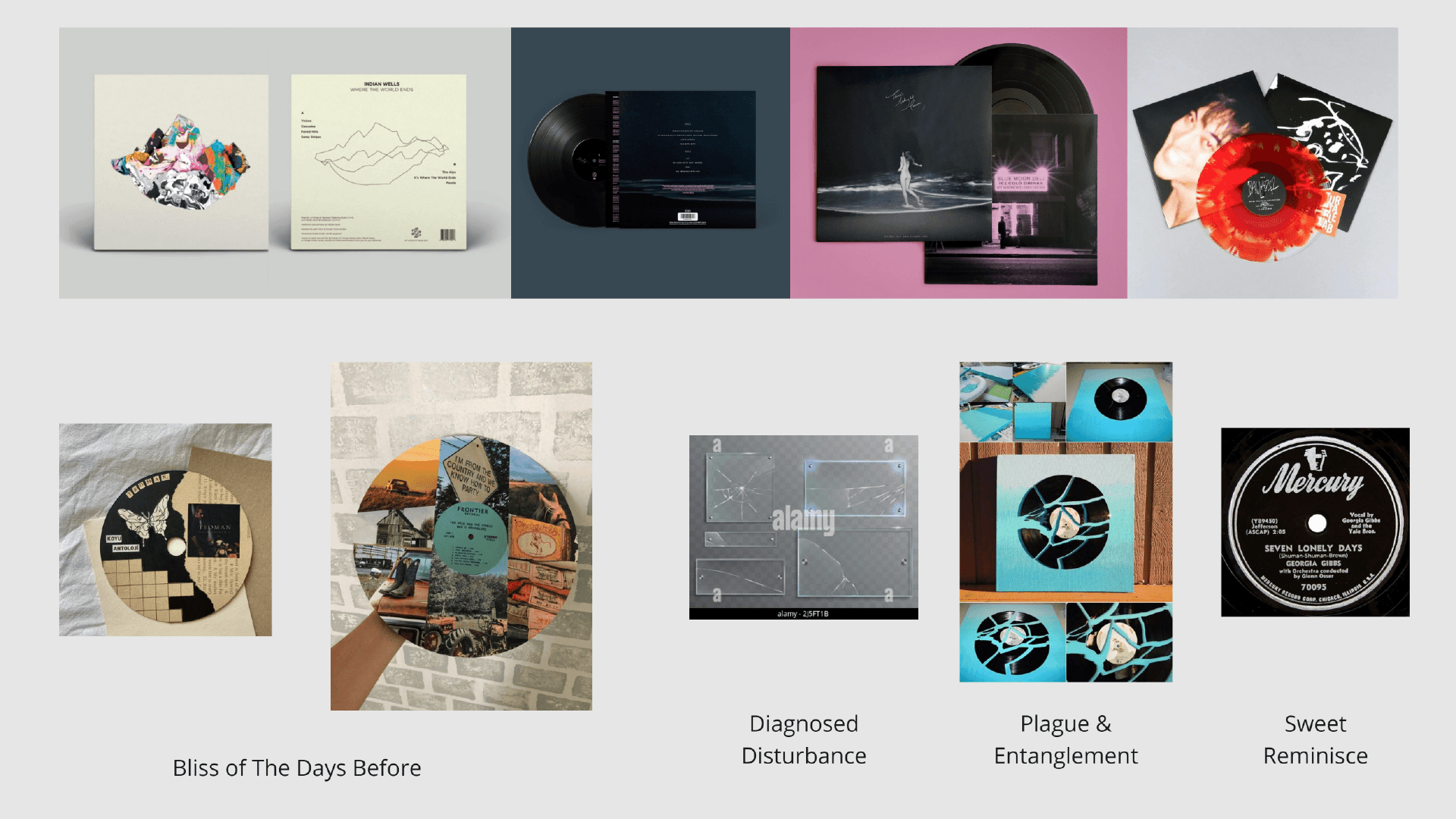
Phase 10: Acrylic Disc Engraving
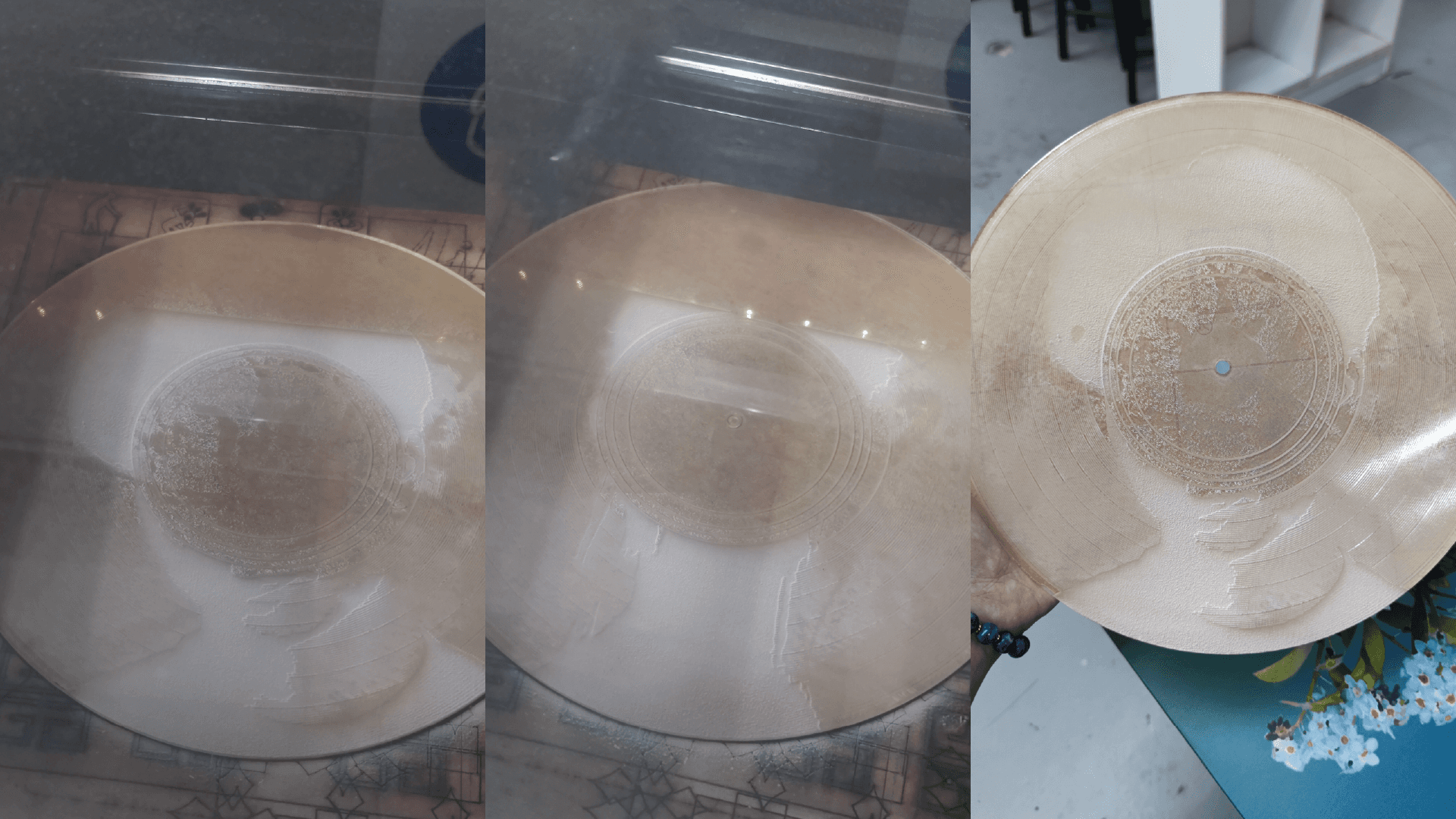
Phase 11: Warping Up Details
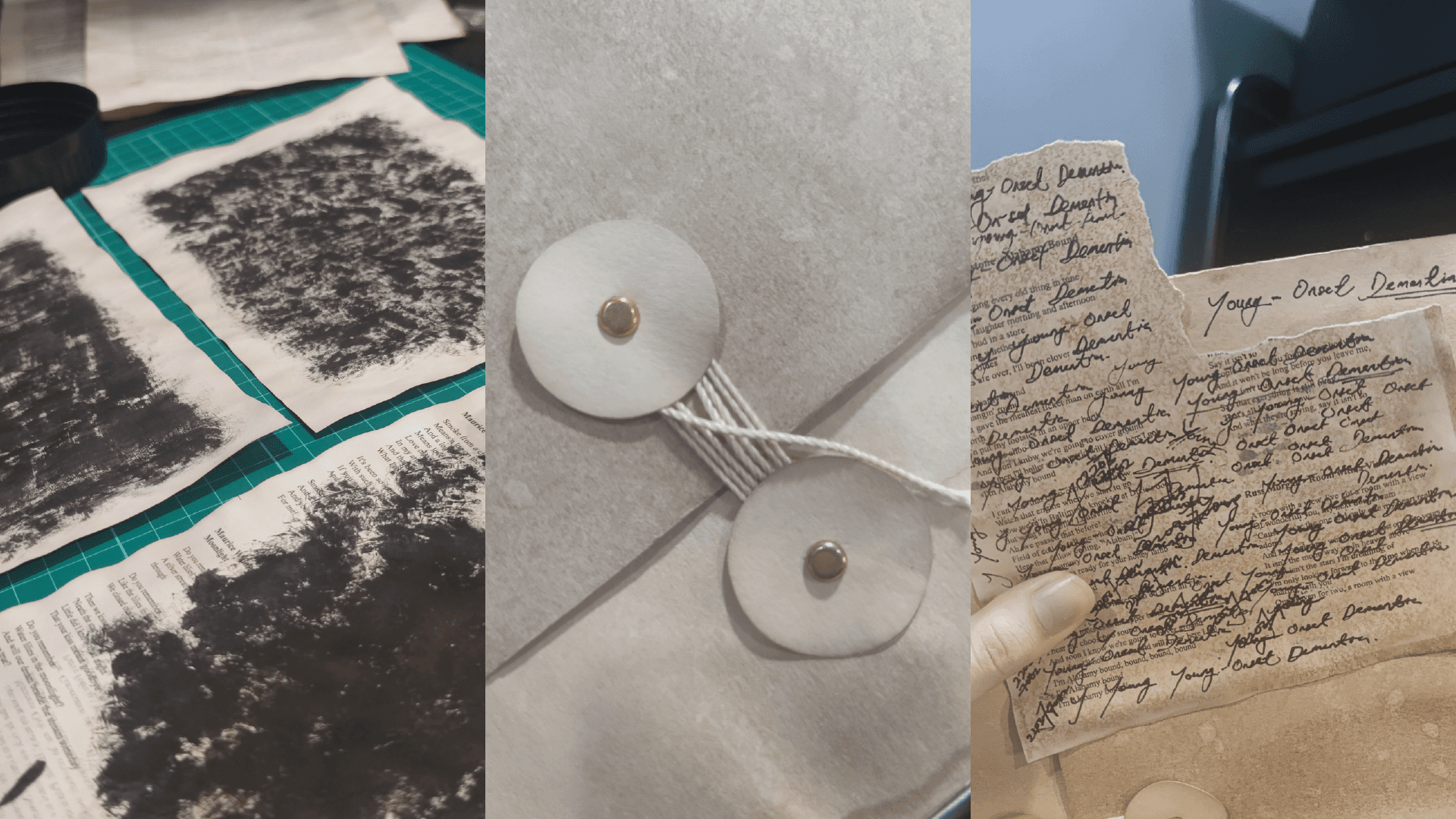
Topic Selection
I’ve chose dementia as the context of my topic, due to I’m drawn into the fact of the unknown horror of grieving the lost of someone who is still alive, and to translate the emotion or feelings of and individual suffering in dementia, raise the awareness to younger generations about the sign or stages.
Phase 1: Ideation Process
For the envisioned informational piece, I've planned to create an illustrated booklet that tells the story of a character's life after being diagnosed with young-onset dementia, depicting the prominent stages of their journey. Additionally, I intend to create a series of acrylic engravings showcasing the progression of dementia. Each piece will represent different stages of the condition.
I've planned to present the piece as separate pages within a folder, and I have considered three options:
Republish style: The entire piece would be fully digitized, allowing for a more conceptual design approach. However, it may lack the expression, textures, and emotional impact that come with traditional methods.
Note-taking style: Everything would be handwritten, emphasizing the emotions involved. However, this option might lack the conceptual design elements.
Combination of both options: I would first handwrite an original copy of the content, then scan and digitize it. During the presentation, I would showcase both the digitalized version and the original handwritten copy.
However, I've chosen the third option and further develop from it.
Phase 2: Story Scripting
During the process of scripting the story, I have chosen Frontotemporal Dementia as the primary type of dementia that afflicts the fictional character in the journal. I made this choice because it is one of the most common dementias that occur at younger ages, and it can exhibit both a steady and rapid progression.
The execution in a GAPEN book as the original copy of the journal and the iteration after it has been tea-stained.
Phase 3: Tea-Stained
Phase 4: Digital Mockup Preview
Each pages will have their own grunge background which is related with the patient's mood and thoughts. Each pages will also have a few highlighted points circled or underlined with red marker which seems that is analyzed by someone, and it is for the audience to glimpse through what is really happening without reading the whole chunk of it. Besides, there will be a masking tape in the corner which label which day and the date of the written page.
Phase 5: Ideation Repurpose & Prototype
Phase 6: Prints, Stained, Burn, Paste
Phase 7: Image Transfer & Stitching
Phase 8: Make Envelopes & Coffee-Stained
Phase 9: Vinyl Album Production
Phase 10: Acrylic Disc Engraving
Phase 11: Warping Up Details
Topic Selection
I’ve chose dementia as the context of my topic, due to I’m drawn into the fact of the unknown horror of grieving the lost of someone who is still alive, and to translate the emotion or feelings of and individual suffering in dementia, raise the awareness to younger generations about the sign or stages.
Phase 1: Ideation Process
For the envisioned informational piece, I've planned to create an illustrated booklet that tells the story of a character's life after being diagnosed with young-onset dementia, depicting the prominent stages of their journey. Additionally, I intend to create a series of acrylic engravings showcasing the progression of dementia. Each piece will represent different stages of the condition.
I've planned to present the piece as separate pages within a folder, and I have considered three options:
Republish style: The entire piece would be fully digitized, allowing for a more conceptual design approach. However, it may lack the expression, textures, and emotional impact that come with traditional methods.
Note-taking style: Everything would be handwritten, emphasizing the emotions involved. However, this option might lack the conceptual design elements.
Combination of both options: I would first handwrite an original copy of the content, then scan and digitize it. During the presentation, I would showcase both the digitalized version and the original handwritten copy.
However, I've chosen the third option and further develop from it.
Phase 2: Story Scripting
During the process of scripting the story, I have chosen Frontotemporal Dementia as the primary type of dementia that afflicts the fictional character in the journal. I made this choice because it is one of the most common dementias that occur at younger ages, and it can exhibit both a steady and rapid progression.
The execution in a GAPEN book as the original copy of the journal and the iteration after it has been tea-stained.
Phase 3: Tea-Stained
Phase 4: Digital Mockup Preview
Each pages will have their own grunge background which is related with the patient's mood and thoughts. Each pages will also have a few highlighted points circled or underlined with red marker which seems that is analyzed by someone, and it is for the audience to glimpse through what is really happening without reading the whole chunk of it. Besides, there will be a masking tape in the corner which label which day and the date of the written page.
Phase 5: Ideation Repurpose & Prototype
Phase 6: Prints, Stained, Burn, Paste
Phase 7: Image Transfer & Stitching
Phase 8: Make Envelopes & Coffee-Stained
Phase 9: Vinyl Album Production
Phase 10: Acrylic Disc Engraving
Phase 11: Warping Up Details
Topic Selection
I’ve chose dementia as the context of my topic, due to I’m drawn into the fact of the unknown horror of grieving the lost of someone who is still alive, and to translate the emotion or feelings of and individual suffering in dementia, raise the awareness to younger generations about the sign or stages.
Phase 1: Ideation Process
For the envisioned informational piece, I've planned to create an illustrated booklet that tells the story of a character's life after being diagnosed with young-onset dementia, depicting the prominent stages of their journey. Additionally, I intend to create a series of acrylic engravings showcasing the progression of dementia. Each piece will represent different stages of the condition.
I've planned to present the piece as separate pages within a folder, and I have considered three options:
Republish style: The entire piece would be fully digitized, allowing for a more conceptual design approach. However, it may lack the expression, textures, and emotional impact that come with traditional methods.
Note-taking style: Everything would be handwritten, emphasizing the emotions involved. However, this option might lack the conceptual design elements.
Combination of both options: I would first handwrite an original copy of the content, then scan and digitize it. During the presentation, I would showcase both the digitalized version and the original handwritten copy.
However, I've chosen the third option and further develop from it.
Phase 2: Story Scripting
During the process of scripting the story, I have chosen Frontotemporal Dementia as the primary type of dementia that afflicts the fictional character in the journal. I made this choice because it is one of the most common dementias that occur at younger ages, and it can exhibit both a steady and rapid progression.
The execution in a GAPEN book as the original copy of the journal and the iteration after it has been tea-stained.
Phase 3: Tea-Stained
Phase 4: Digital Mockup Preview
Each pages will have their own grunge background which is related with the patient's mood and thoughts. Each pages will also have a few highlighted points circled or underlined with red marker which seems that is analyzed by someone, and it is for the audience to glimpse through what is really happening without reading the whole chunk of it. Besides, there will be a masking tape in the corner which label which day and the date of the written page.
Phase 5: Ideation Repurpose & Prototype
Phase 6: Prints, Stained, Burn, Paste
Phase 7: Image Transfer & Stitching
Phase 8: Make Envelopes & Coffee-Stained
Phase 9: Vinyl Album Production
Phase 10: Acrylic Disc Engraving
Phase 11: Warping Up Details